
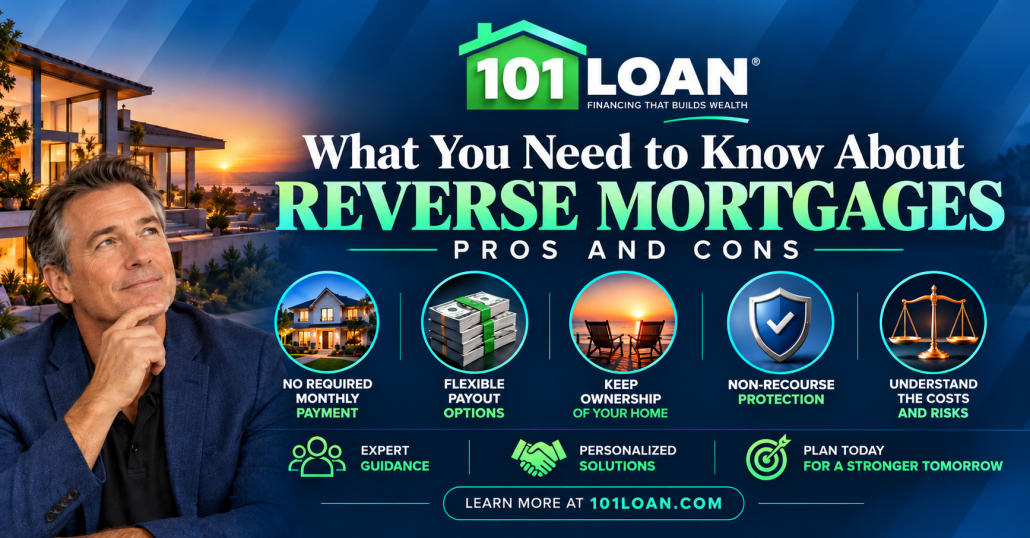
Reverse Mortgages: The Pros and Cons – What You Need to Know?
Reverse Mortgages: The Pros and Cons
For many homeowners 55 and older, the house is their largest asset — yet that wealth is locked up in walls and a roof. A reverse mortgage, most commonly the FHA-insured Home Equity Conversion Mortgage (HECM), lets you turn some of that equity into cash without selling or making monthly mortgage payments.
The Pros
No required monthly mortgage payment. Payments are optional. The loan is typically repaid when you sell, move out permanently, or pass away, which can free up meaningful monthly cash flow.
Flexible ways to receive funds. You can choose a lump sum, monthly payments, a line of credit, or a combination. An unused HECM line of credit grows over time, creating a reserve that can be tapped later in retirement.
You keep ownership. Title stays in your name. You can remain in your home as long as you meet the loan obligations.
Non-recourse protection. You or your heirs will never owe more than the home is worth when the loan is repaid, even if the balance exceeds the home’s value. FHA insurance covers the difference.
Proceeds generally aren’t taxed as income. Loan proceeds are borrowed money, not earnings, and typically don’t affect Social Security or Medicare. (Confirm your situation with a tax advisor.)
Can be used to buy a home. A HECM for Purchase lets retirees right-size into a new home without taking on a monthly mortgage payment.
Jumbo options for higher-value homes. For homes worth more than the HECM limit, proprietary (jumbo) reverse mortgages offer loan amounts up to $5 million. These are privately insured rather than FHA-backed, so terms vary by lender. Some are available starting at age 55, depending on the state; HECMs require age 62.
The Cons
Upfront costs can be significant. Expect an FHA upfront mortgage insurance premium, an annual insurance premium, origination fees, and standard closing costs. For a short stay, those costs may outweigh the benefits.
The balance grows over time. Because interest and fees are added to the loan, your equity shrinks. That may leave less to pass on to heirs.
Ongoing obligations remain. You must continue paying property taxes, homeowners insurance, HOA dues, and keep the home in good repair. Falling behind can trigger default.
Possible impact on need-based benefits. Funds you hold can affect eligibility for programs like Medicaid or SSI if not managed carefully.
Spouse and family considerations. A younger spouse not on the loan has limited protections, and heirs must repay or refinance the loan (or sell the home) to keep it.
Required counseling. HUD requires a session with an approved counselor before you apply.
Is It Right for You?
A reverse mortgage works best for homeowners who plan to stay put long term, want to strengthen retirement cash flow, and understand the tradeoffs for their estate. It’s wise to involve family members and your financial advisor in the conversation. I’m happy to run the numbers for your home and walk through every option, with no pressure. To learn more, read “The Truth About Reverse Mortgages” at www.101Loan.com
Best Regards,
Rob McCarthy
Senior Mortgage Advisor
www.101Loan.com
650-465-8957 c | rob@101loan.com
CA DRE #01165697 | NMLS #121019
Note: Rates and fees subject to change without notice or until locked in and approved by lender.


 I Stock


